Do Vitamins Expire? Shelf Life, Storage & Potency
This article is for general wellness and educational purposes. It isn’t medical advice, and it doesn’t diagnose, treat, cure, or prevent any disease.
Somewhere in most kitchens there’s a bottle nobody wants to make a decision about. It’s half full, the date on the label passed a while ago, and the honest question is: does this still do anything, or is it just taking up shelf space?
The answer is more interesting than a simple yes or no. Vitamins don’t spoil the way milk does. What they do is lose potency — slowly, quietly, and at different rates depending on the nutrient, the format, and how the bottle has been stored. Here’s a plain-English look at what those dates mean and how to get the most out of every bottle you buy.
What the date on the bottle really means
Most supplements carry a “best by” or “expiration” date. That date isn’t a safety cliff. It’s the manufacturer’s guarantee that, stored properly and unopened, the product should still contain the amounts listed on the Supplement Facts panel through that date.
Reputable manufacturers often build in a small overage during formulation, precisely because certain nutrients degrade over time. So the date is best read as a potency promise rather than a spoilage warning. After it passes, a product generally isn’t dangerous — it may simply deliver less than the label says.
Two dates worth knowing
- The printed date assumes an unopened bottle kept in reasonable conditions.
- The “once opened” window starts when you break the seal, because air, light, and moisture begin doing their work. Liquids and powders are more sensitive here than sealed tablets.
Some nutrients fade faster than others
Not every vitamin ages at the same pace. In general:
- Vitamin C and the B vitamins are water-soluble and comparatively fragile. Heat, light, and oxygen can all chip away at them.
- Vitamin A, D, E, and K are fat-soluble and tend to be a bit more stable, though vitamin A and oils can be sensitive to light and oxidation.
- Minerals — calcium, magnesium, zinc, trace minerals — are elements, so they don’t degrade the way vitamins do.
- Probiotics and enzymes are the most perishable, since they depend on living or active material.
- Collagen peptides are generally stable when kept dry and sealed, though flavor can drift.
That mix is why a broad formula like our Liquid Mega Premium Multivitamin is worth storing thoughtfully — you’re protecting the delicate nutrients alongside the sturdy ones.
Do liquid vitamins expire faster than pills?
Sometimes, and it’s worth understanding why. A tablet is a dry, compressed, relatively inert package. A liquid is a water-based system, so the nutrients are already dissolved — part of what makes liquids easy for the body to take up, and also part of what makes them more sensitive to storage.
In practice, this comes down to three habits:
- Refrigerate after opening when the label says to. Cold slows nearly every degradation reaction.
- Close the cap tightly. Oxygen exposure is the main enemy of an opened bottle.
- Use it within the window on the label — for many liquids that’s a matter of weeks to a few months after opening.
The good news is that a daily liquid usually gets finished well inside its window. A 32-serving bottle taken once a day is gone in about a month — a far shorter runway for degradation than a giant tablet bottle that lingers for a year.
Where you store vitamins matters more than you’d think
The bathroom medicine cabinet is the most popular place to keep supplements and one of the worst. Every hot shower turns that room humid and temperature-swinging, and moisture is rough on both tablets and powders.
A few simple upgrades:
- Cool, dark, and dry wins. A pantry shelf or a kitchen cabinet away from the stove, dishwasher, and window is ideal.
- Leave the desiccant packet in the bottle. It’s there to absorb moisture, not as packaging filler.
- Keep products in their original containers. Amber or opaque bottles block light on purpose, and the label carries the lot number and date.
- Refrigerate what the label tells you to — and skip the fridge for anything that doesn’t call for it, since condensation works against dry formats.
- Don’t leave a bottle in the car. A hot vehicle reaches temperatures no supplement is designed for.
Signs it’s time to replace a bottle
Beyond the date, your senses are a reasonable guide. Consider retiring a product if you notice:
- An off, sour, or unusually sharp smell that wasn’t there before
- Visible mold, cloudiness, or separation that doesn’t resolve with a shake
- Tablets that are crumbling, badly discolored, or stuck together
- A cap that was left off, or a bottle that spent a summer in a hot car
When in doubt, replacing a bottle is inexpensive peace of mind — especially for something you take daily and want working at full strength.
How to buy so it never becomes a problem
The most practical fix is to stop over-buying:
- Buy the size you’ll finish in one to three months rather than the biggest bottle on the shelf.
- Check the date at purchase and look for plenty of runway, not a few remaining weeks.
- Keep one bottle open at a time per product, so nothing sits half-used in a cabinet.
- Write the open date on the label. Three seconds, no guesswork later.
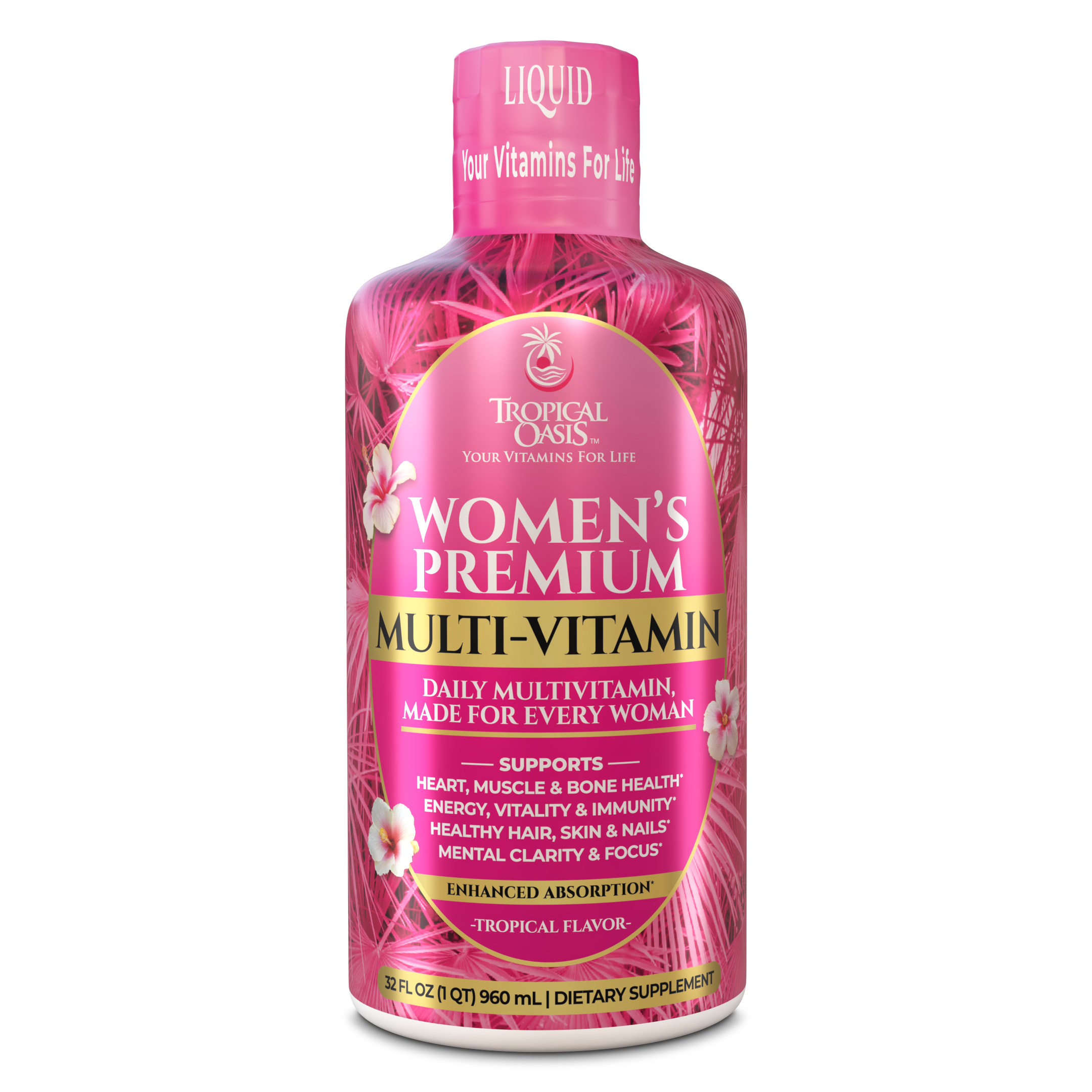
- Anchor it to a habit — taking your Women’s Premium Liquid Multivitamin right after your morning coffee means the bottle actually empties on schedule.
Consistency solves the expiration problem almost by accident. A supplement you take daily rarely gets old enough to worry about.
The short version
Vitamins don’t spoil so much as fade. The printed date is a potency guarantee, not a safety alarm; water-soluble nutrients fade fastest; heat, light, moisture, and oxygen are what to guard against. Store it cool and dark, cap it tight, refrigerate when the label says so, and buy a size that matches how you actually use it.
If you’d like to take a look at what a fresh, well-stored daily routine could look like, you can browse the full Tropical Oasis lineup here.
Always follow label directions. If you’re pregnant or nursing, taking medications, or managing a health condition, check with your healthcare professional before starting a new supplement.